
The pattern, not only the sore spot
The exam looks at how you stand and how the spine is stacked, so care is aimed at the shift that keeps reloading the same joint.
A posture-focused chiropractic method for neck or back pain that keeps returning in the same way. The visit looks at how you stand, then pairs a specific adjustment with exercise and a supported hold in that direction.

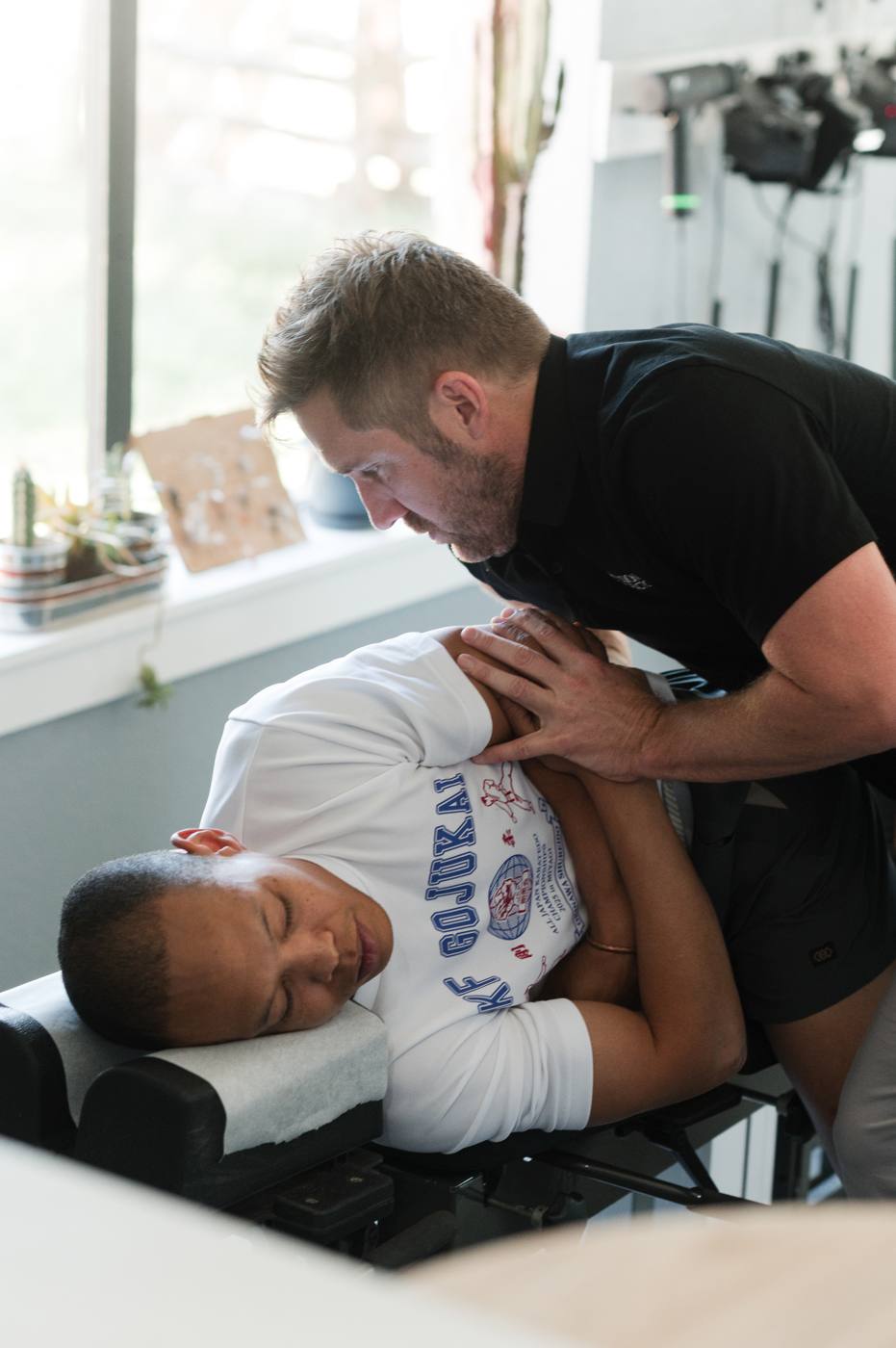
Chiropractic BioPhysics, usually shortened to CBP, is chiropractic care aimed at posture and spinal alignment as well as the joint that hurts. A specific adjustment is paired with home exercise and a supported hold, each set opposite the way you currently carry yourself. The plan comes from your exam. It is not a promise that an X-ray number will change by a set amount.
CBP is often sold with dramatic before-and-after pictures. Here is the plain version for Dripping Springs: what the method is, how a visit differs from a standard adjustment, what a course of care looks like, and a straight word on cost, insurance, and the results we will not invent.
CBP is a named chiropractic technique built around the shape of the spine and the way you carry yourself. It grew out of work by chiropractor Donald Harrison and the clinicians who continued it. A stiff, sore joint still matters. The extra question is whether a larger pattern is feeding it: a head carried forward, a rounded mid-back, a flattened low back, or a torso shifted to one side. That pattern loads the spine all day, so care aimed only at the sorest spot can calm a bad week and leave the pattern in place.
In the office that idea becomes a few kinds of work, used together only when the exam supports them. Nothing here is automatic, and nothing is sold before anyone has looked at you.
You may hear this called a mirror-image setup. It means the exercise, the adjustment, and the traction face the opposite way from the shift we measured. A head that sits forward is set up to ease back. A lean to one side is set up toward the middle. The name describes the direction. It is not a promise the shift is gone after one visit, and it is not a number we will quote you.
A standard adjustment restores motion to a stiff joint, then sends you home with a few changes to how you sit, lift, or sleep. CBP still includes that hands-on work. What it adds is a posture plan: the adjustment, the home exercise, and any traction point at the same shift, and the next visit checks whether that shift and your symptoms are changing. If they are not, the plan changes. You stay dressed. The adjustment is specific, not a long routine. Traction, when it is used, is time in one supported position, and the home exercise is short enough to keep doing.
People in Dripping Springs usually ask about CBP for one of these reasons. The list starts the conversation. It is not a promise that each one is a fit.
The first visit is a history and an exam: what you do all day, what you have already tried, and whether care should wait. Bone density, prior surgery, night pain, and arm or leg symptoms can change the plan, including a referral to a medical doctor first. How many visits, and over how many weeks, is TBD until that exam. A course length or a posture measurement quoted before an exam is a guess, and we will not print one. You hear the recommendation and you can agree or decline. A long block of visits is not assigned before that conversation.
No referral is needed to book a first visit. Dollar amounts, and which plans this office accepts, are TBD. They are left off this page on purpose, because a shared description of the method cannot know your plan or what your exam will show. We go over the costs in plain numbers before anything begins, including what you would pay if you are not using insurance. If a film or a longer visit would add to the cost, you hear that first.
We cannot promise a specific outcome, a change on an X-ray, or what your insurance will cover. Every plan and every spine is different. What we can promise is an honest look and a straight answer before you commit.
11 percent of U.S. adults received chiropractic care in the past year in 2022, compared with 7.4 percent in 2002, in National Health Interview Survey figures published by the National Center for Complementary and Integrative Health. CBP is one method inside that care, and its hands-on piece is spinal manipulation. The same summary reports moderate-quality evidence of a modest improvement in acute low-back pain, similar to nonsteroidal anti-inflammatory drugs, and a modest improvement in function. That finding is about manipulation in general, not posture correction, and it is not a result we can assign before an exam.
Source: U.S. National Center for Complementary and Integrative Health (NCCIH), Spinal Manipulation: What You Need To Know. nccih.nih.gov
The exam looks at how you stand and how the spine is stacked, so care is aimed at the shift that keeps reloading the same joint.
The adjustment, the home exercise, and any traction point the same way, instead of three unrelated things in one appointment.
You hear what we found, what we recommend, and what it costs before a course of care starts. How long you would come is TBD until that exam.
The first visit starts with what hurts, your day, and any reason care should wait.
We look at how you stand and which joints are stiff. Films only if they would change the plan.
You leave knowing what we found and what we would do. Visit counts and fees stay specific to you.
Office work and short home exercise follow the same direction. If nothing is changing, the plan changes too.
The hands-on part is a specific adjustment. Traction, when it is used, is a supported hold in one direction. It should feel like a position you can stay with. If a setup is too much, we change it or stop. Mild soreness later that day can follow new spinal work and usually fades. Sharp pain during the visit is a reason to stop and reassess.
That number is TBD until we have examined you. It depends on how long the pattern has been there and how you respond once care has started. After the first visit we give you a range and the reason for it, and we check along the way that the plan is helping. You are not signed onto a long block of visits before that conversation.
No. Some CBP plans use posture photos or spinal films, because a picture can change what we recommend. Many people do not need films at all. If imaging would change your plan, we say what it is for, what it costs, and what we would do differently with the result. If a medical doctor should see you first, that is the recommendation instead.
We can work on posture, on stiff joints, and on how a spine with a curve moves and feels. We cannot promise that your head will sit back by a set number of millimeters, or that a curve will shrink by a set number of degrees. Quoting either figure before an exam invents a result. If a doctor is already following a curve, we stay inside that plan and say clearly what this care is aiming at.
For most people with ordinary mechanical neck and back pain, careful chiropractic care has a strong safety record. CBP uses that same hands-on work, plus positioning and exercise matched to the exam. The first visit looks for reasons to use less force, skip a setup, or send you for medical care first. Serious complications are rare. Tell us about headaches, bone health, prior surgery, and your medicines before any neck work.
Same-week visits for new patients in Dripping Springs. Come as you are, and we will tell you whether this method fits.
Jon Eberle, DC, CBP-Trained Doctor of Chiropractic. Chris Hagen, DC, advanced certification in Chiropractic BioPhysics (CBP). Peter Lenhart, Director of Rehab.

CBP-Trained Doctor of Chiropractic

Chiropractic Biophysics
Director of Rehab